Food and Beverage Trend Forecasting: How Leading Brands Get Ahead of Consumer Demand
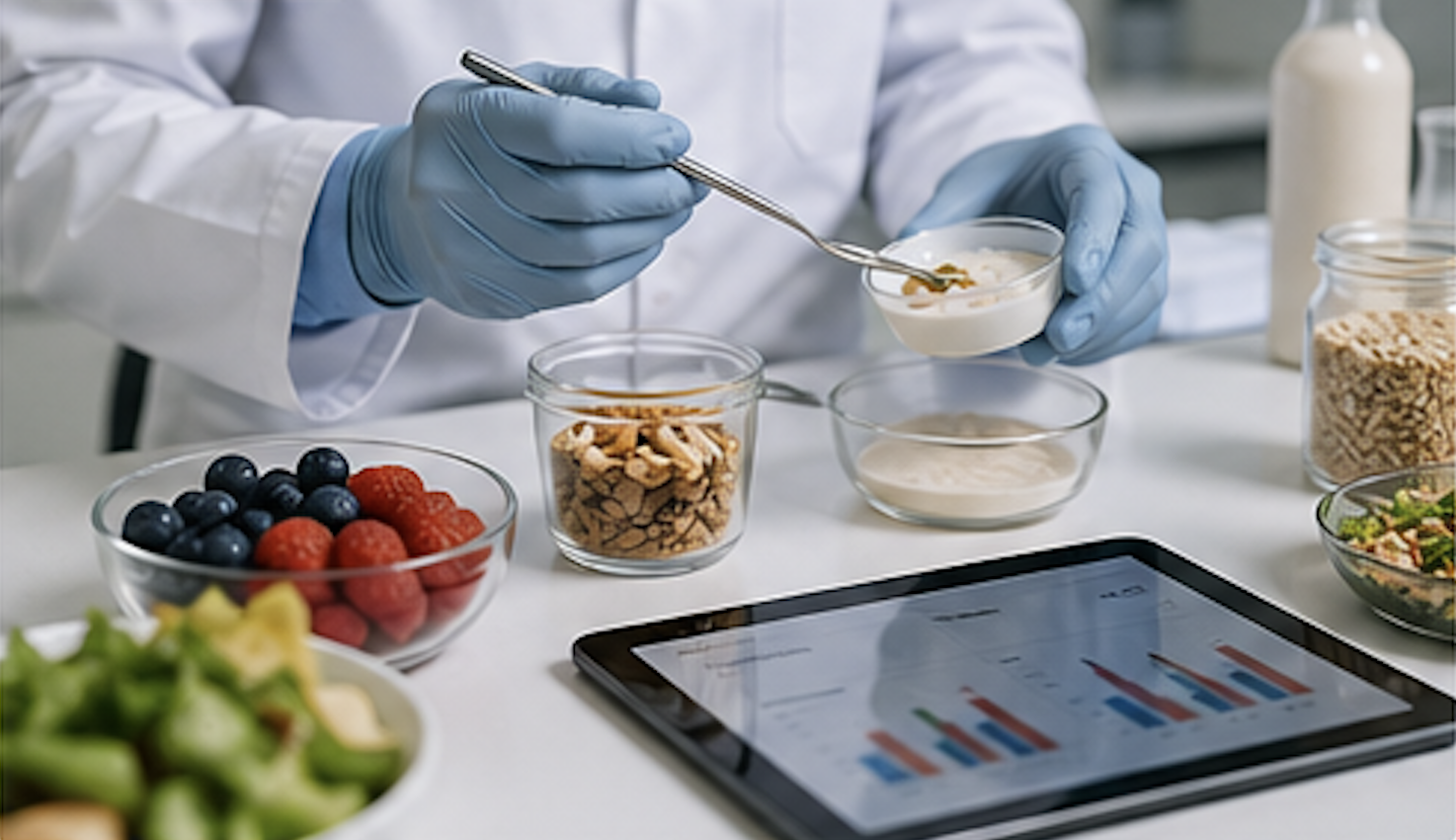
Food and Beverage Trend Forecasting: How Leading Brands Get Ahead of Consumer Demand
The food and beverage industry moves faster than most categories. A flavor that's obscure in January can be mainstream by September. A packaging format that seems niche today can become the category default within 18 months. And the brands that catch these shifts early — rather than react to them — consistently outperform those that don't.
But trend forecasting in food and beverage is genuinely difficult. Consumer preferences are shaped by an increasingly complex mix of signals: global cuisine influence, health science, social media, restaurant culture, sustainability values, and economic pressures. No single channel or research method captures all of it.
This article breaks down how modern food and beverage trend forecasting works, what signals matter most, and how leading innovation teams are using AI-powered platforms to get ahead of demand before it peaks.
Why Traditional Trend Forecasting Falls Short
For most of the past three decades, food and beverage trend forecasting meant commissioning reports from firms like Mintel, Innova, or Euromonitor, attending trade shows like SIAL and Anuga, and building on internal sales data. This approach worked reasonably well in a slower market.
The problem is that the market no longer moves at that pace. In the past, a trend typically took three to five years to move from early adoption to mainstream retail. Today, that cycle has compressed dramatically. A dish goes viral on TikTok, reaches the restaurant menus of early-adopter cities within months, and hits retail shelves within a year. By the time a traditional trend report documents it, the innovation window for first movers has already closed.
The brands caught flat-footed by this acceleration are not the ones without smart people. They're the ones still using slow tools to track a fast market.
Where Food Trends Actually Start
Understanding where trends originate is the foundation of good forecasting. The journey typically follows a predictable path:
Global cuisine and chef culture tends to be the furthest upstream source. Ingredients and flavor profiles adopted by innovative chefs in cities like New York, London, Copenhagen, and Tokyo often appear in mainstream retail categories three to five years later. Yuzu, fermented foods, and koji are good examples — all originated in professional kitchens before becoming consumer product categories.
Restaurant menus are the next stage. When a flavour or format starts appearing across multiple independent restaurants in multiple cities simultaneously, that's a strong signal of commercial readiness. This is particularly visible in the beverage category — oat milk, for example, dominated café menus in Scandinavian cities well before it became a mainstream retail product globally.
Social media and content creators have become the most powerful trend accelerators in the last five years. A single viral recipe video can create measurable demand for an ingredient within weeks. Platforms like TikTok, YouTube, and Instagram have created a direct feedback loop between consumer curiosity and purchasing behavior that simply didn't exist before.
Retail product launches are where trends become commercially visible — but by this point, most of the innovation window has already passed. Tracking new retail launches is important for competitive intelligence, but not for getting ahead of demand.
The Ingredients Gaining Traction Right Now
Based on current real-time trend data, several ingredient and flavor categories are showing strong growth signals in the European food and beverage market:
Fermentation-forward flavors continue to grow beyond their initial health positioning. Miso, koji, lacto-fermented vegetables, and kombucha-adjacent flavor profiles are expanding from their natural and health food origins into mainstream snack, sauce, and beverage categories.
Functional ingredients with specific health claims are accelerating. This goes beyond protein — consumers are actively seeking products with adaptogenic ingredients, nootropics, and gut-health-specific components like postbiotics and short-chain fatty acids. The opportunity is in moving these from supplement format into everyday food and beverage applications.
Hyper-local sourcing and provenance is becoming a positive purchase driver, not just an ethical baseline. Products that can tell a specific geographical story — not just "local" but specifically where and how — are commanding premium positioning across multiple categories.
Better-for-you indulgence remains one of the most durable trend spaces in the category. Consumers are not reducing indulgence; they are demanding better ingredient quality and cleaner formulation within indulgent product formats. Chocolate, confectionery, and premium snacking are the clearest expressions of this.
How AI-Powered Forecasting Changes the Innovation Cycle
The difference between traditional trend research and AI-powered trend forecasting is not just speed. It's the ability to process and synthesize signals across channels that humans cannot monitor simultaneously.
A platform that continuously tracks restaurant menus across 50 countries, social media content in multiple languages, retail product launch databases, and online review sentiment — and applies machine learning to identify statistically significant growth patterns — gives your innovation team a fundamentally different starting point than a quarterly report.
The practical impact is visible at every stage of the NPD process. Ideation becomes more evidence-led. Concept validation can reference real trend trajectory data rather than extrapolation. Launch timing can be optimized to enter a trend at its growth phase rather than at its peak.
Perhaps most importantly, the conversation between insights teams and commercial leadership changes. "We think this trend is interesting" is a much harder argument to make than "this ingredient has shown 127% growth in European restaurant menus over the past six months, with 95% confidence it will reach mainstream retail within 12 to 18 months."
Building a Trend-Informed Innovation Process
The companies with the highest new product success rates in food and beverage are not the ones that get lucky with trend selection. They're the ones that have built systematic processes for continuous trend monitoring, rapid evaluation, and stage-gated decision making based on real data.
That process starts with having the right tools — but it also requires building a culture where trend data is taken seriously at the innovation planning table, not treated as decorative content for a strategy presentation.
If your NPD team is still starting from intuition and validating with traditional research, you're operating in the opposite order to where the market is heading. The starting point should be data, and the intuition should come in at the stage of interpretation and creative execution — where human judgment genuinely adds the most value.
Trendable tracks over 100 million data points daily to give food and beverage innovation teams early visibility on emerging consumer trends. Book a free demo to see what's trending in your category.